

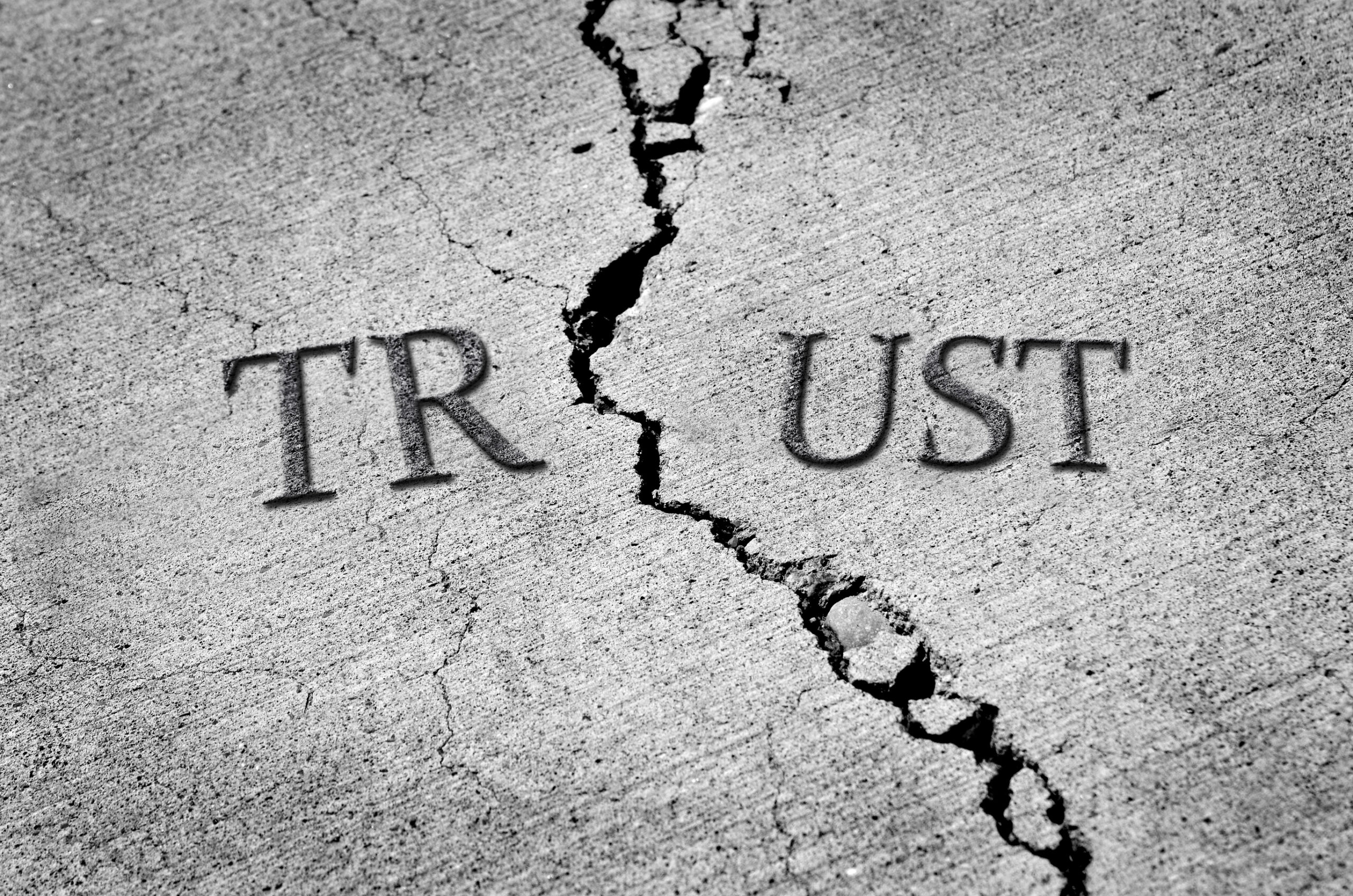
Trust is one of those organizational concepts that everyone agrees matters and almost nobody measures with the rigor it deserves.
It appears in values statements. It surfaces in culture assessments as a vague but persistent concern. It gets referenced in leadership development programs as a foundational competency. And then it gets set aside in favor of more measurable, more immediately actionable organizational priorities.
Until it becomes impossible to set aside.
2026 may be that year.
The conditions that erode organizational trust have been accumulating for several years — layoffs delivered through impersonal processes, return to office mandates that contradicted flexibility commitments, AI-driven role uncertainty that leadership has often been unwilling to address honestly, and a sustained pattern of organizational communication that has prioritized message management over genuine transparency.
Each of those conditions eroded trust incrementally. Together they have produced a trust deficit in many organizations that is now large enough to create measurable drag on performance outcomes — and visible enough that it can no longer be managed as a background concern.
The question is whether organizations will diagnose it accurately — and respond with the interventions that actually work — or whether they will mistake it for an engagement problem, a culture problem, or a management problem and respond accordingly.
What Organizational Trust Actually Is
Trust in organizational contexts is not a single thing. It operates at multiple levels simultaneously — and the interventions that address each level are meaningfully different.
There is trust in leadership — the belief that senior leaders are competent, honest, and genuinely committed to the organization's stated values. There is trust in systems — the belief that the organization's processes for making decisions, allocating resources, evaluating performance, and managing change are fair and consistently applied. There is trust in colleagues — the belief that the people you work with are reliable, competent, and operating with shared intent.
All three dimensions of trust have been under pressure in most organizations for the last several years. But the most consequential and most difficult to restore is trust in leadership.
When employees lose confidence that senior leaders are telling them the truth — about the organization's performance, about the implications of AI for their roles, about the reasoning behind restructuring decisions — something fundamental shifts in the employment relationship.
They stop sharing honest information upward because they no longer trust that it will be received and acted upon in good faith. They stop taking organizational commitments seriously because they have learned that those commitments are contingent on conditions that can change without notice. They stop investing discretionary effort in organizational priorities because they are no longer confident those priorities reflect a coherent and stable strategic direction.
The organization continues to function. But it functions at a fraction of its potential — because the discretionary energy that distinguishes adequate performance from excellent performance has been quietly withdrawn.
Why the Trust Deficit Is Hitting the Bottom Line Now
Trust deficits are slow-building and fast-manifesting.
They build over years of small breaches — commitments not kept, explanations not given, decisions not explained, concerns not acknowledged. Each individual breach is manageable. The cumulative pattern produces something that is not.
The manifestation happens when the trust deficit reaches a threshold — a critical mass of accumulated skepticism that changes how the workforce responds to organizational communication, strategic initiatives, and change efforts.
Organizations that have reached that threshold in 2026 are discovering that their normal organizational levers are no longer producing their expected effects.
Change initiatives that would previously have generated reasonable adoption are meeting resistance that feels disproportionate to the magnitude of the change. Communication campaigns that would previously have landed with moderate credibility are being received with active skepticism. Leadership visibility efforts that would previously have been appreciated as genuine connection are being interpreted as performance.
The tools haven't changed. The workforce's relationship to those tools has.
And the bottom line impact is real. Research consistently shows that high-trust organizations outperform low-trust organizations on virtually every performance metric that matters — productivity, innovation, retention, customer satisfaction, and financial performance. The gap between high-trust and low-trust organizational performance is not marginal. It is substantial and compounding.
Organizations operating with a significant trust deficit are not just experiencing a culture problem. They are operating with a structural performance disadvantage that will not be addressed by any initiative that doesn't directly address the trust conditions driving it.
The Most Common Mistake Organizations Make
The most common organizational response to a trust deficit is communication.
More town halls. More leadership visibility. More transparency reports. More pulse surveys followed by action planning. More statements of organizational values and commitments.
All of these interventions have value when trust is intact. When trust has been significantly eroded they are counterproductive.
Here's why.
Employees who have lost trust in leadership do not receive increased communication as evidence of transparency. They receive it as evidence of organizational anxiety — as a signal that leadership knows there is a problem and is trying to manage perception rather than address the underlying conditions.
A leader who has made and broken commitments standing in front of a town hall announcing new commitments is not rebuilding trust. They are adding to the inventory of commitments that will be evaluated against future behavior.
Trust is not rebuilt through communication. It is rebuilt through consistent behavior over time — specifically through the alignment of what leadership says with what leadership does across enough repeated interactions that employees update their expectations.
That process is slow. It cannot be accelerated through better messaging. It can only be sustained through behavioral consistency — showing up in the same way, keeping the same commitments, being honest about the same uncertainties — across months and years rather than quarters.
Organizations that understand this design their trust rebuilding strategy around behavioral commitments that are specific, visible, and trackable — not around communication campaigns that are easy to launch and easy to discount.
What HR Leaders Can Do
The HR function's role in addressing organizational trust deficits is both more important and more constrained than it might appear.
More important because HR has the organizational intelligence to diagnose trust conditions accurately — to distinguish trust in leadership from trust in systems from trust in colleagues, to understand which specific breaches have been most damaging, and to design interventions that address root causes rather than symptoms.
More constrained because the most powerful trust-building interventions are behavioral — and behavior is ultimately owned by the leaders HR supports rather than by HR itself.
The most effective thing HR leaders can do in a trust deficit environment is help senior leaders understand specifically what has eroded trust — not in general terms but in the specific decisions, communications, and patterns of behavior that employees have experienced as breaches. And then help them design the specific behavioral commitments that would demonstrate genuine change over time.
That requires the kind of honest conversation with senior leaders that HR functions sometimes avoid — because it requires telling leaders things they may not want to hear about the impact of their own behavior on organizational trust.
It is also one of the highest value contributions the HR function can make to organizational performance.
Because trust — once genuinely rebuilt — creates organizational conditions that make everything else more possible. Better strategy execution. Stronger change adoption. More honest information flowing in all directions. More genuine discretionary effort from a workforce that believes its contribution matters and that the organization it works for is worthy of that contribution.
The trust deficit is real. It is measurable. And in 2026 it is finally showing up in the performance data in ways that make it impossible to address as a background concern.
The organizations that respond with the right diagnosis — and the patience to rebuild trust through behavioral consistency rather than communication campaigns — will build a performance advantage that compounds over time.
The ones that respond with another town hall will discover that the trust deficit has a longer memory than the communication cycle.
