

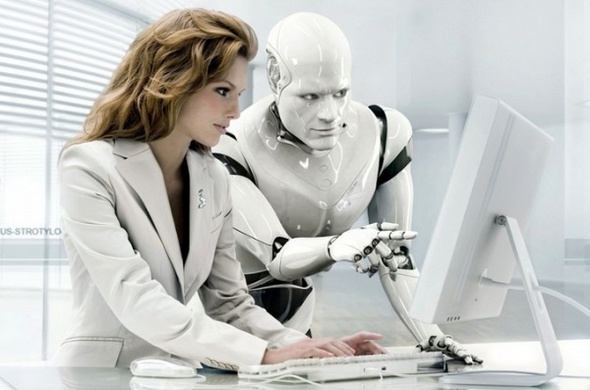
The boardroom fell silent.
We'd been discussing AI implementation strategy for the better part of an hour—which departments would be affected, how to communicate with frontline workers, what the timeline looked like for automation. Then the youngest board member asked a question that stopped everyone cold:
"If AI is going to displace knowledge workers and middle managers, why wouldn't it eventually come for us too?"
The CEO laughed it off. Others shifted uncomfortably. One executive launched into a explanation about how strategic thinking can't be automated. But I noticed nobody actually answered the question.
Here's the thing: It's a fair question. And the fact that C-suite executives get so uncomfortable when it's raised tells you everything you need to know about our blind spots.
We're happy to discuss AI's impact on everyone else's jobs. We analyze which roles will be automated, which skills will become obsolete, how workers will need to adapt. But when it comes to our own positions? Suddenly AI is just a tool to help us work smarter, not a potential replacement.
That's convenient. It's also probably wrong.
What the C-Suite Actually Does
Let's start by being honest about executive work. Strip away the prestige, the corner offices, and the compensation packages. What do C-suite leaders actually do all day?
They analyze data and make decisions based on patterns. They allocate resources across competing priorities. They develop strategy by synthesizing market information, competitive intelligence, and internal capabilities. They communicate vision and direction. They build relationships with stakeholders.
Now let me describe what AI is increasingly good at: Analyzing massive datasets to identify patterns humans miss. Optimizing resource allocation across complex variables. Processing market signals and competitive intelligence at scale. Even generating communications tailored to specific audiences.
See the overlap?
I'm not suggesting AI will replace CEOs tomorrow. But pretending there's no risk because executive work is "strategic" while everyone else's work is "routine"? That's denial dressed up as confidence.
AI Job Redesign Roadmap Toolkit 2026
The Tasks AI Could Handle Today
Let's get specific about what AI could already do, if we're being honest.
Data-Driven Decision Making
How much of executive decision-making is actually analyzing data, identifying trends, and choosing between options based on projected outcomes? That's exactly what AI excels at—and without the cognitive biases, political considerations, or emotional attachments that cloud human judgment.
I've watched executives spend hours in meetings debating resource allocation, everyone bringing their own departmental agenda to the conversation. An AI could process the same data, model dozens of scenarios, and identify optimal solutions in minutes.
Would those solutions be perfect? No. Would they often be better than what emerges from political compromise and gut feel? Probably.
Operational Oversight
CFOs spend considerable time monitoring financial performance, identifying variances, and flagging issues. AI can do this continuously, in real-time, with greater accuracy than any human reviewing monthly reports.
COOs focus on operational efficiency, process optimization, and performance management. AI systems are already better than humans at detecting inefficiencies, predicting bottlenecks, and optimizing workflows.
What's the unique human value-add in these functions, really?
Strategic Planning
This is where executives always push back. "Strategy requires creativity, vision, judgment—things AI can't do!"
Maybe. But let's be honest about what strategic planning looks like in most organizations. It's analyzing market trends, assessing competitive positioning, identifying opportunities and threats, and developing plans to achieve objectives.
AI can analyze market data more comprehensively than any human. It can assess competitors without blind spots or bias. It can model countless scenarios and identify patterns that human strategists miss.
Yes, it takes human judgment to make final decisions. But how much of "strategic thinking" is really just pattern recognition and data synthesis? More than we'd like to admit.
What Executives Won't Admit
Here's what I've observed after years working with C-suite leaders: Many are already using AI to do significant portions of their work. They just don't talk about it.
The CFO who relies on AI-powered analytics to identify financial anomalies and forecast trends. The CMO using AI to analyze customer data and optimize marketing spend. The CEO using AI tools to draft communications, analyze market intelligence, and model strategic scenarios.
They're not replacing themselves—they're augmenting their capabilities. But the line between augmentation and replacement gets blurrier every year.
And here's the uncomfortable question: If AI is already handling substantial portions of executive work, what are we actually paying C-suite leaders for?
The Argument for Human Executives
I'm not arguing that AI should replace the C-suite tomorrow. There are legitimate reasons why human leadership still matters.
Judgment in Ambiguous Situations
AI is excellent when parameters are clear and data is available. It struggles with truly novel situations where the rules haven't been written yet. The kind of judgment calls that come up during crises, major transformations, or unprecedented market shifts—those still require human wisdom.
At least for now.
Stakeholder Relationships
Leadership isn't just making smart decisions. It's bringing people along, building trust, navigating politics, reading rooms, and managing relationships with boards, investors, employees, and communities.
AI can't do that. It can't build genuine human connection or earn trust through presence and authenticity.
Accountability and Ethics
Someone needs to own the consequences of decisions. We're not ready—legally, culturally, or ethically—to let AI systems make choices that affect thousands of people's livelihoods and millions of dollars in stakeholder value.
Humans provide accountability. For better or worse, we need someone to blame when things go wrong and someone to credit when things go right.
Culture and Values
Organizations need leaders who embody and reinforce culture and values. Who model desired behaviors. Who make decisions that reflect what the organization stands for, not just what the data suggests.
That's still fundamentally human work.
But Here's the Catch
Every argument for why AI won't replace executives is actually an argument for why executive work needs to change.
If your value as a C-suite leader is primarily in analyzing data and making decisions based on that analysis, you're vulnerable. AI will do that better than you within the next few years, if it doesn't already.
If your value is in judgment, relationship-building, accountability, and culture-shaping—the things AI genuinely can't do—then you need to be spending most of your time on those things.
But look at how most executives actually spend their days. Meetings reviewing data. Presentations about performance metrics. Emails about operational issues. Decisions that could largely be automated.
How much time do you spend on the things that only humans can do? Be honest.
What This Means for the C-Suite
I think we're heading toward a future where executive teams look very different than they do today.
Smaller C-Suites
If AI can handle data analysis, performance monitoring, and routine decision-making, do you need as many executives? Probably not.
I suspect we'll see organizations with leaner executive teams focused on the genuinely human aspects of leadership, supported by AI systems that handle the analytical heavy lifting.
Different Skill Requirements
The executives who survive won't be the best data analysts or the most operationally focused. They'll be the ones who excel at judgment in ambiguity, relationship-building, culture-shaping, and ethical decision-making.
If you've built your career on being the person who knows the numbers best or can analyze situations most thoroughly, that's not enough anymore. AI does that better.
New Value Propositions
C-suite compensation is justified by the value executives create. As AI takes over more executive functions, the remaining human leaders will need to demonstrate unique value.
That means getting clearer about what you actually contribute that a machine can't. And being willing to eliminate or automate the parts of your role that don't require human judgment or relationship skills.
How many executives are ready to have that conversation about their own jobs?
The Question We're Avoiding
Here's what nobody wants to say out loud: If we're willing to automate middle management, knowledge workers, and skilled professionals in the name of efficiency, why should the C-suite be exempt?
The usual answer is that executive work is fundamentally different—more strategic, more complex, requiring uniquely human capabilities.
But is that really true? Or is it just the story we tell ourselves to justify our positions and compensation?
I've seen executives agonize over whether to implement AI that might displace 50 customer service workers. But the idea that AI might reduce the need for a VP-level position? That's not even on the table.
The discomfort around this question reveals our bias. We see other people's jobs as potentially automatable but view our own as inherently requiring human intelligence and judgment.
That selective blindness is dangerous. Because the same forces driving automation throughout organizations will eventually reach the executive suite. The only question is timing.
What Leaders Should Do
If you're a C-suite executive, here's my challenge to you:
Get Honest About Your Value
What do you actually do that AI couldn't do? Not in theory, but in practice. Look at your calendar for the last month. How much of that time was spent on activities that genuinely require human judgment, relationship-building, or culture work?
If the answer is less than 50%, you're vulnerable.
Evolve Your Role
Stop doing work that AI can handle. Delegate the data analysis, the performance monitoring, the routine decision-making. Focus your time on the things that only humans can do well.
This isn't about working less. It's about working differently—on the aspects of leadership that create unique value.
Model the Transition
If you expect your workforce to adapt to AI, you need to demonstrate that adaptability yourself. Show that you're willing to let AI handle parts of your work. Be transparent about how you're evolving your role.
Leading through transformation requires vulnerability and authenticity. You can't ask others to embrace change you're unwilling to model.
The Bottom Line
Will AI replace the C-suite? Not entirely, and probably not soon.
But will it dramatically reduce the number of executives organizations need and fundamentally change what executive work looks like? Almost certainly.
The executives who thrive won't be the ones who deny this reality or claim their work is too important to be affected by automation. They'll be the ones who get honest about what AI can do, evolve their roles to focus on genuinely human leadership, and model the kind of adaptation they're asking from everyone else.
The rest? They'll be the case studies future leaders reference when discussing why companies that resisted AI transformation got left behind.
Which kind of executive will you be?
